
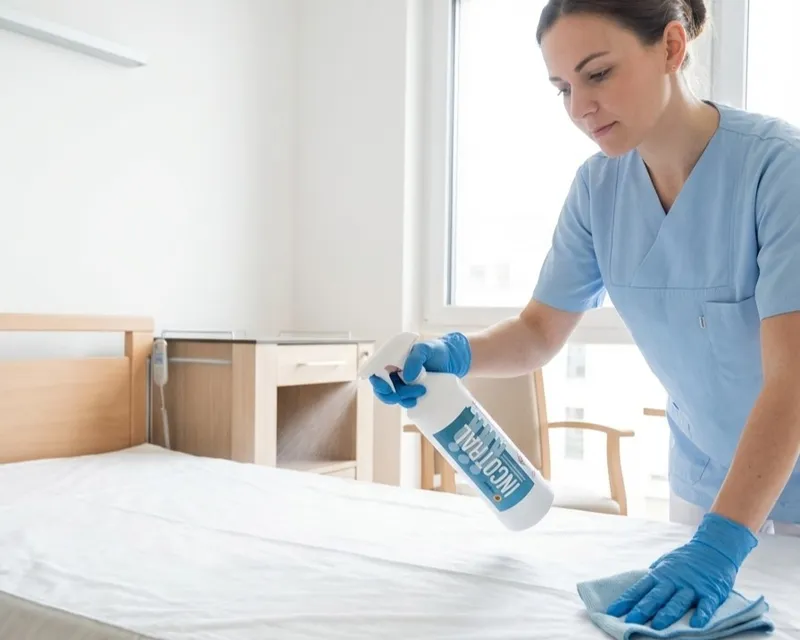
Odors in Care Facilities – Causes, Risks, and Sustainable Solutions
Odors in nursing homes, clinics, and assisted living facilities are among the biggest everyday challenges. They often arise faster than you think and linger stubbornly even when surfaces seem clean. It becomes especially unpleasant when urine, stool, or other organic residues remain in textiles, mattresses, or upholstered furniture. An odor-laden environment not only appears unprofessional, it can significantly affect the well-being of residents, relatives, and staff.
Odor burden in care facilities: causes and significance
In care settings, several factors come together that promote unpleasant odors:
1. Organic contamination penetrates deeply
Urine, stool, or vomit often get into:
-
Mattresses
-
Care chairs
-
Wheelchair cushions
-
Upholstered surfaces
-
Textiles
Mattresses and upholstery absorb liquids. If contamination is not fully removed, microorganisms begin to work inside them, creating an intense, persistent odor.
2. Residents with care needs are more affected
Incontinence, illness, wound care, and limited mobility lead more often to hygiene accidents. This is completely normal, but requires especially reliable cleaning.
3. Conventional cleaners often only mask odors
Many conventional products contain fragrances or chemical odor blockers.
The problem: The odor is masked for a short time, the cause remains, and after a few hours it returns, often even stronger than before.
4. Germs and odors are connected
Organic residues are a breeding ground for microorganisms and can, in the long term:
-
Promote germ growth
-
Burden surfaces
-
Create unpleasant working conditions
Odors are therefore more than an “aesthetic” challenge; they are also a hygiene indicator.
The sustainable solution: tackle odors at the source
To truly eliminate odors, you should not fight the smell but the source of the odors - the organic contamination itself. This is exactly where modern biological cleaning methods come in.
How Incotral solves odor problems for good
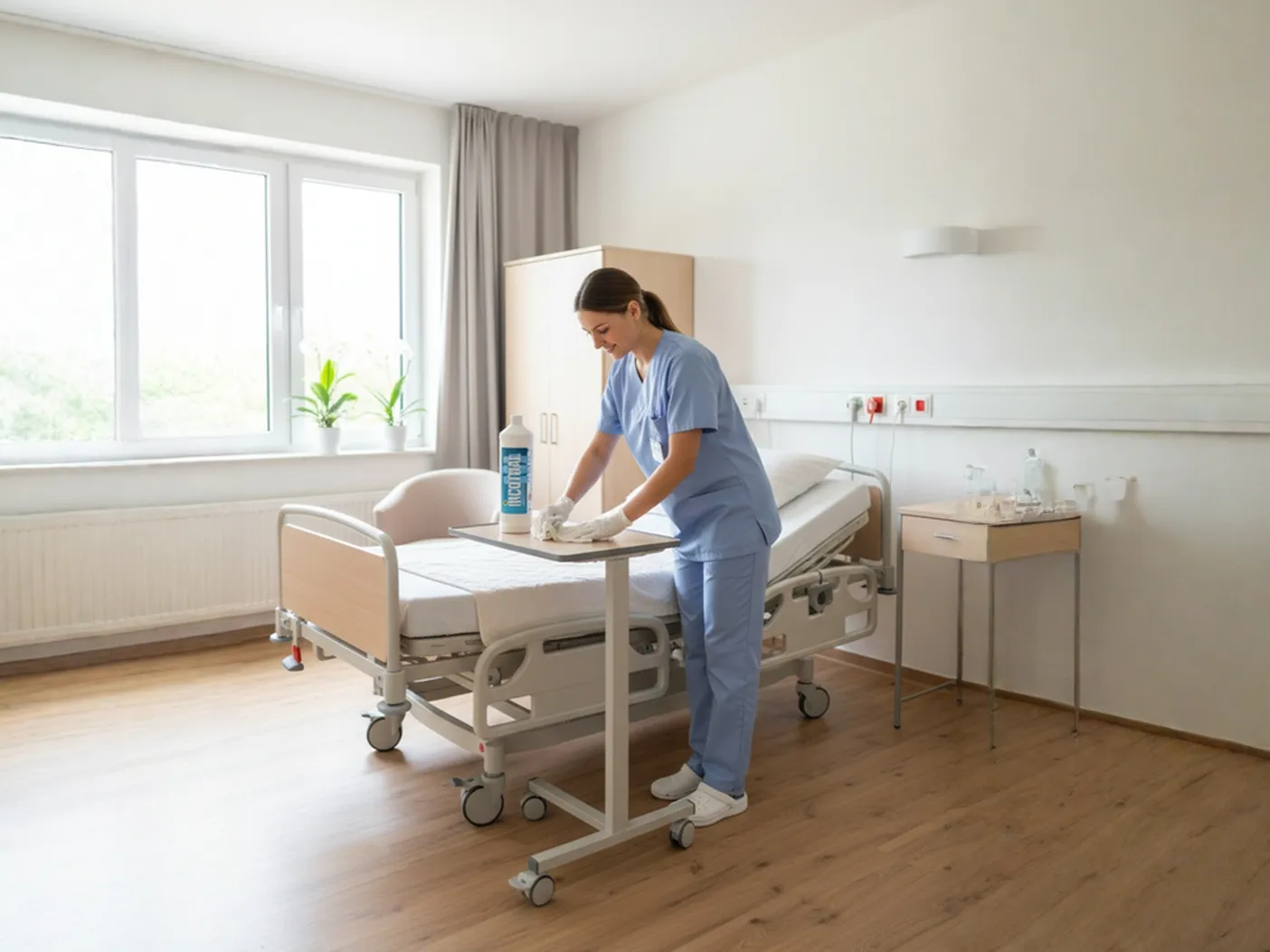
Incotral was developed specifically for areas where organic contamination and strong odors play a central role - especially in care and medical environments.
1. Natural microorganisms instead of chemicals
Incotral uses highly effective microorganisms that:
-
Urine residues
-
Feces
-
Vomit
-
Sweat
-
Other organic substances
biologically break down, rather than chemically covering them.
This breaks down the odor source naturally.
The result:
-
Sustainable odor elimination
-
No aggressive chemicals, no irritating fumes
A huge advantage in sensitive care settings.
2. Ideal for mattresses, upholstery, and textile care surfaces
These areas are especially hard to clean. Incotral penetrates deep into the fibers and ensures that no residual moisture, no bacteria, and no odor molecules remain.
3. Safe for residents and caregivers
-
Skin-friendly
-
No labeling required
-
Dermatologically tested “very good”
That makes application safe even for sensitive people and surfaces.
4. Suitable for the entire care routine
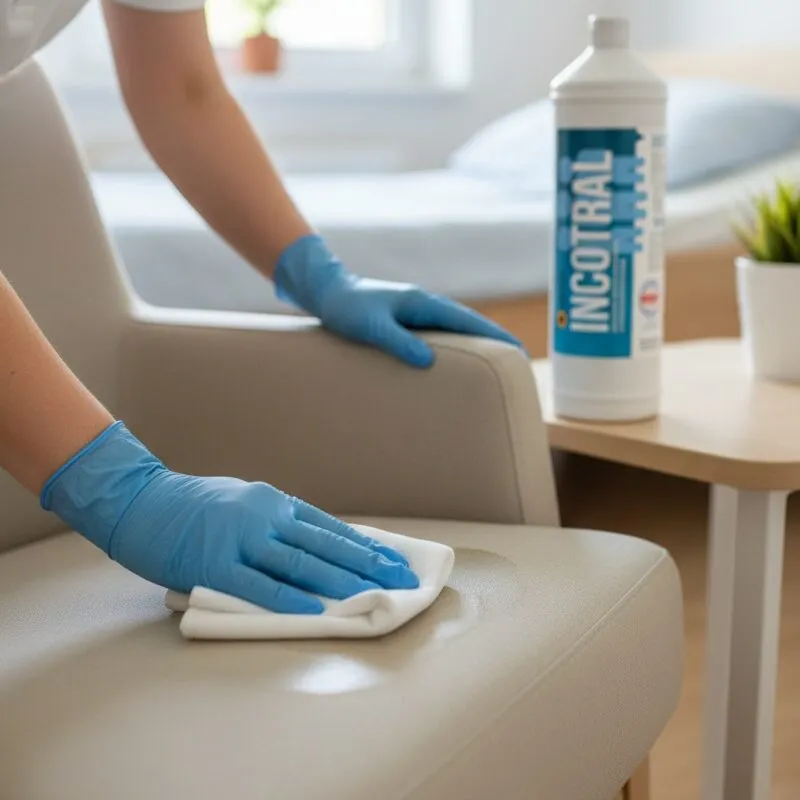
The odor-neutralizing cleaner Incotral can be used for:
-
Care beds and mattresses
-
Wheelchairs and seat cushions
-
Upholstered furniture
-
Toilet chairs and bedside tables
-
Clothing and textiles
Something that is needed daily in nursing homes.
Practical example from everyday care
A typical scenario: A resident has an incontinence episode in bed. Despite immediately changing the bedding, a slight urine odor remains. It penetrates deeper into the mattress, and even after cleaning with a normal cleaner it reappears.
With Incotral:
-
The affected area is sprayed generously.
-
The microorganisms begin to biologically break down the odor source.
-
After a short exposure time, the odor is not just masked - it is gone, because the cause has been removed.
Cleaning can be this simple and sustainable.
Also in home care: reliable help with odors and organic residues
Odor problems do not only affect nursing homes and clinics - they are also a major issue in home care. People with incontinence who use leg bags, urinal condoms, incontinence materials, or catheters often struggle with leaks or small drips that occur when emptying the bag. These quickly reach upholstery, armchairs, or mattresses. Many relatives and affected people know the problem: despite thorough cleaning, an unpleasant urine odor remains and keeps coming back.
That is because conventional cleaners usually only clean the surface or briefly mask odors with fragrances. The real cause - organic residues - remains deep in the fibers.
Incotral offers a real alternative: The cleaner works both as a powerful textile and upholstery cleaner and as a natural odor neutralizer. The microorganisms it contains biologically break down urine and other organic substances instead of masking them. This makes the product ideal for sofas, armchairs, mattresses, car seats, or wheelchair cushions.
Conclusion: make everyday care easier with natural, effective odor elimination
Odors are part of everyday care - but they do not have to remain. Biological cleaning with products like Incotral offers:
-
Real odor elimination instead of masking
-
Safe use without aggressive chemicals
-
Sustainable hygiene in sensitive areas
-
Better quality of life for residents
-
A more pleasant working environment for caregivers
When cleanliness, health, and well-being are in focus, choosing a sustainable, effective cleaner is crucial - and that is exactly what Incotral was developed for.