
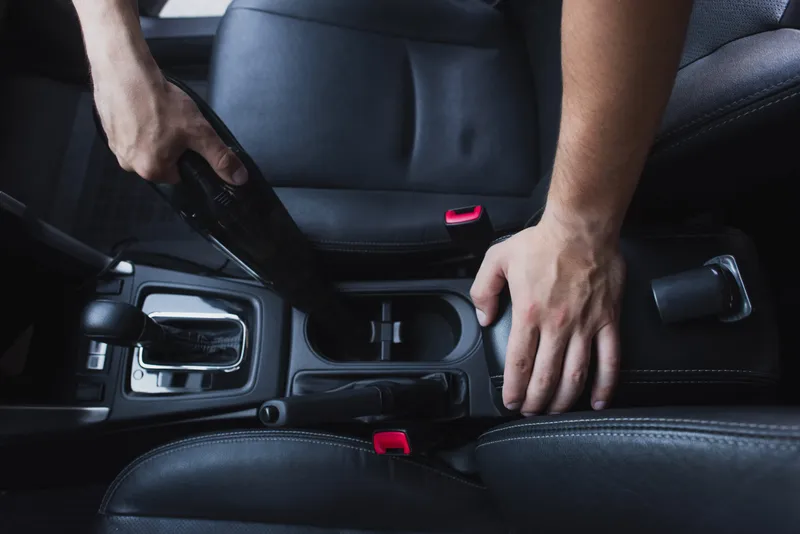
Remove Car Odors - The Ultimate Guide
Bad smells in the car are torture. There are few other situations where your own nose is so at the mercy of its fate as in your own car. Sure, there are air conditioners, windows, and all sorts of air fresheners to control such situations a little. But what if that’s simply not enough? How else can you remove odors from your car?
Some smells are so bad that you already have an uneasy feeling just thinking about having to get into the car. Every car ride becomes a nightmare.
In this article, we won’t deal with superficial cleaning. We assume you’ve already thoroughly cleaned your car. Instead, we’ll focus on situations where a bad smell in the car exists that cannot be removed by normal cleaning methods.
How to Do Deep Cleaning Properly
In a deep cleaning, we typically mean the type of cleaning done in a professional car detailing. However, even in those, often only superficial (cosmetic) cleanings are performed.
To really thoroughly remove odors from the car, we need to not only clean the surfaces but also ensure cleanliness deep inside, especially with the upholstery.
Things Often Overlooked Even in Car Deep Cleaning
Places that aren’t normally seen, like the underside of seats, or places that are often forgotten, like the headliner, the seatbelts, door seals, or the ventilation filters and ducts, must also be thoroughly cleaned. Odors settle in all open-pored surfaces, which in the vehicle interior is about 90% of the area.
For carpets and upholstery, which often are the primary odor source, you need heavier equipment, such as a spray extraction device.
What Is a Spray Extraction Device?
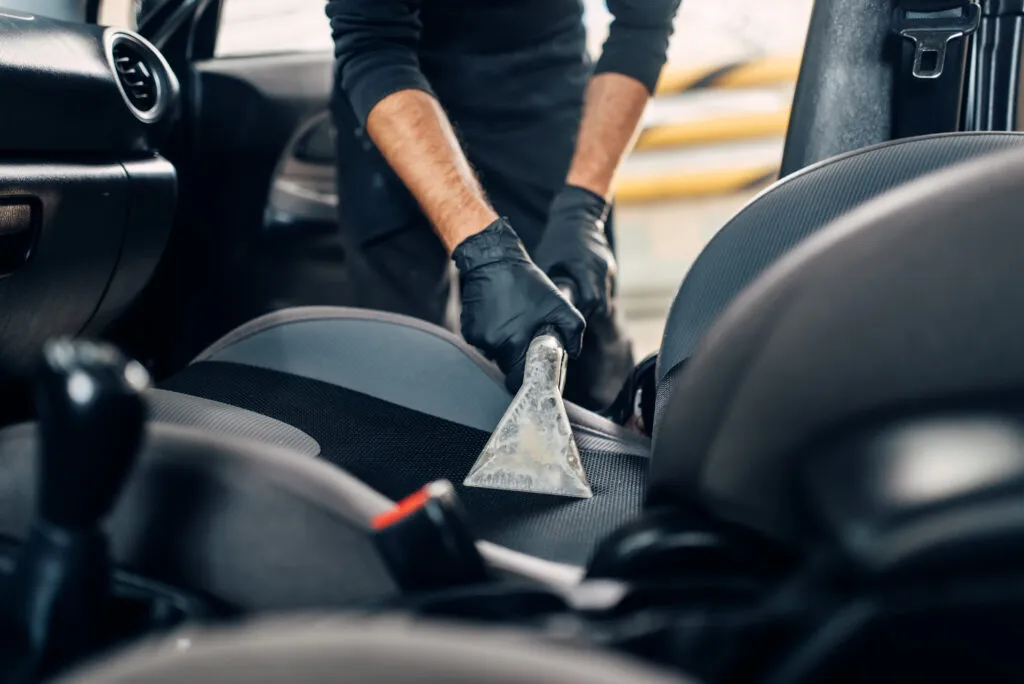
A spray extraction device is a special device used for deep cleaning of upholstery and carpets. It’s relatively easy to use and can be purchased at many specialty stores.
We happen to have such a cleaner in our range, namely our Carpet and Upholstery Cleaner.
Cleaning Done, But Smell Still Present
This case is not uncommon. Very often people contact me who are practically despairing because they can’t get rid of a smell despite apparently everything being perfectly cleaned.
But don’t worry, that’s exactly why we wrote this article. There is definitely still hope.
Treating Odors Correctly to Permanently Remove Them from the Car
Car odors come in many very different variations. Sweat odors, pet odors from dogs and other pets. Odors caused by vomit, urine, or feces are also not uncommon, especially in commercial vehicles. Milk smell (from spoiled milk) can become particularly bad and stubborn. Then there’s the smell of gasoline or diesel and many more.
Odors primarily arise from organic contamination and the resulting accumulation of bacteria or fungi.
If there’s a smell, there’s an odor source that can somehow be removed.
What to Do About Smoke Smell in the Car?
Smoke smell is one of the most common problems of our customers and readers, so we’ve written a detailed, separate article on how to effectively remove smoke smell from a car!
What’s Often Overlooked in Car Cleaning
As mentioned, people overlook some important areas even in professional car cleaning. These include the headliner, ventilation (and filter), storage compartments, door panels and door gaps, and the undersides of seats.
Especially areas like the seatbelts are often overlooked, although they are practically in direct contact with our bodies on every drive.
The Headliner Is a Collection Point for Odors
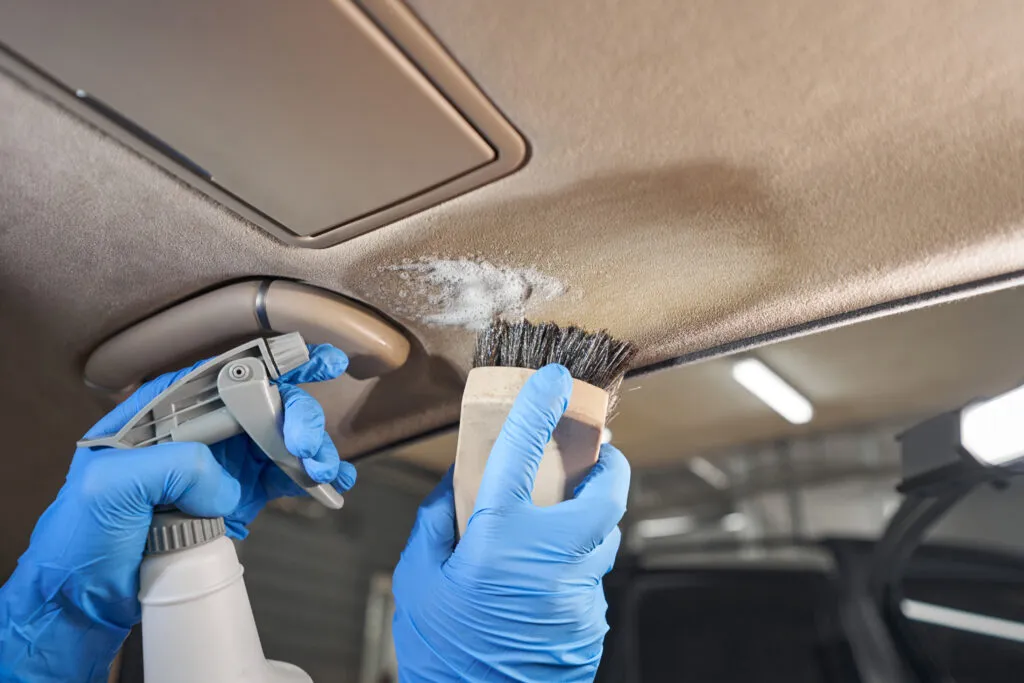
To remove unpleasant odors from the car, it’s important to also clean the headliner. The headliner is the upholstered ceiling inside the car, often made of a fabric material. Since the headliner is often overlooked, unpleasant odors can accumulate there.
Dog and Pet Odors in the Car
Pet hair and pet saliva can be a strong source of odor in the car, as falling pet hair can collect bacteria, which contributes to odor formation. Or they may already be colonized with bacteria from the animal’s saliva, which are then released into the air.
It’s important to thoroughly clean these bacteria sources to avoid the formation of the typical “pet or dog smell” in the car.
Odor Neutralization in Vehicle Ventilation or Heating
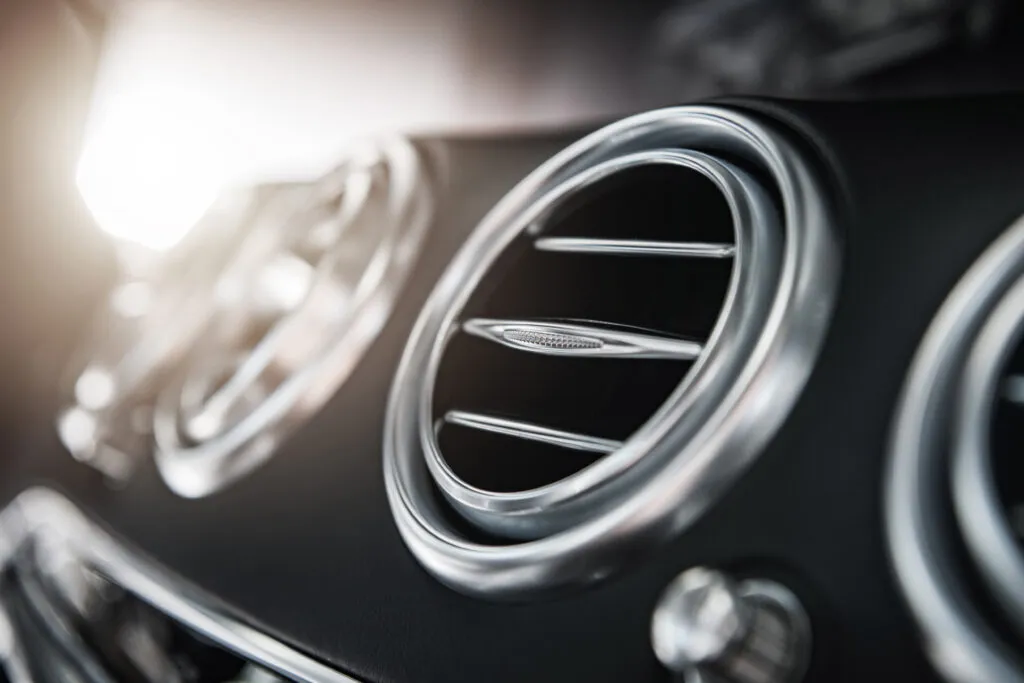
Sometimes the source of odor is actually unreachable, namely in the ventilation system. This usually includes the heating, air conditioning, and recirculation.
Dirt and bacteria may have accumulated in the ducts there. To eliminate these odors, there are various measures you can take.
First, you should definitely replace or clean the air filter.
Another option is using microorganisms to clean the ventilation ducts. Set the ventilation to maximum level and recirculation, then spray a spray with microorganisms into the ventilation shafts.
Special Odors to Remove from the Car
Some odors can be particularly stubborn and aren’t easily removed from the car. These include odors like:
- Gasoline
- Spoiled milk
- Vomit
- Feces and urine
These odors can be treated with odor removers based on microorganisms.
Caution: Gasoline smell can indicate a problem with the vehicle! If gasoline smell is regularly perceived without gasoline having been clearly spilled in the car’s interior, the car should definitely go to the workshop.
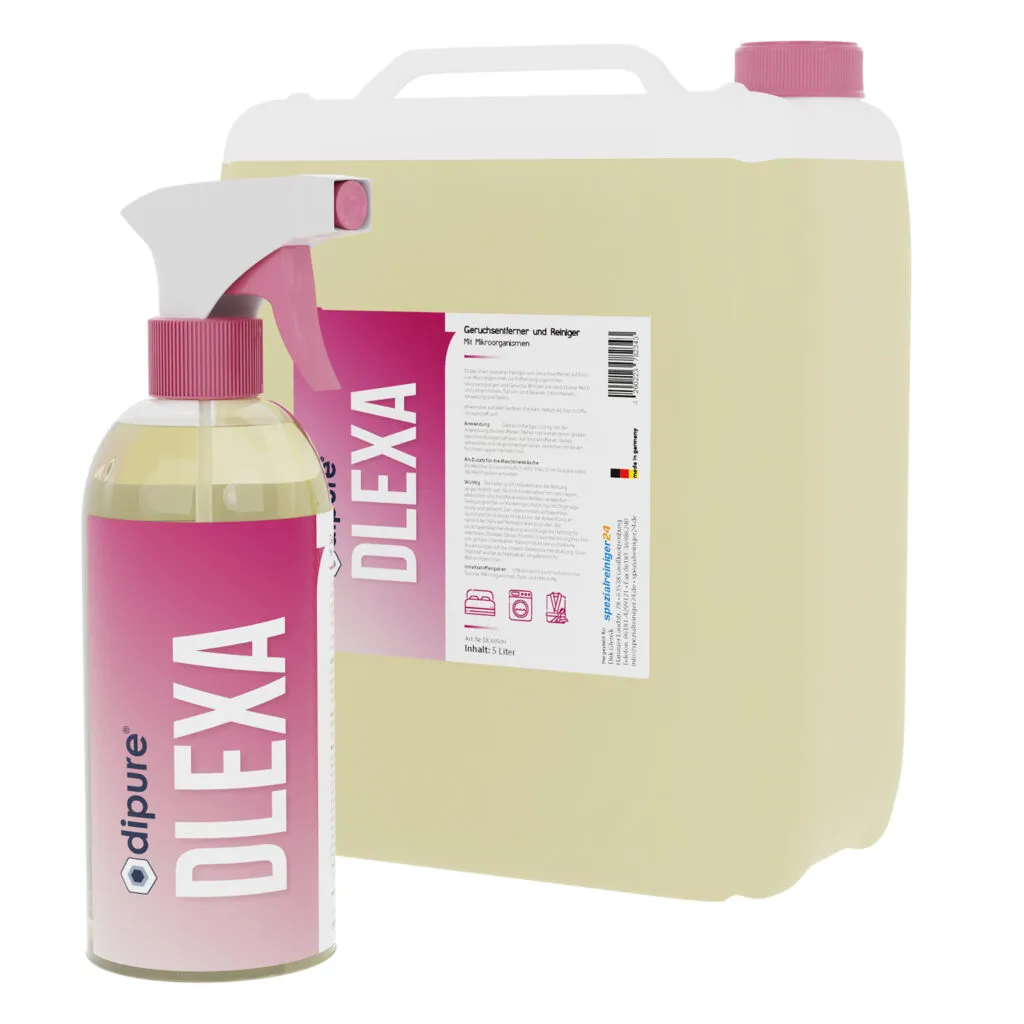
If deep-seated contamination is suspected that isn’t easy to clean, self-cleaning microorganisms should be used, such as dipure DLexa.
Why We Advise Against Ozone Treatments
A very popular form of odor neutralization is a so-called ozone treatment. A device is placed in the vehicle that releases the gas ozone over a long period.
Ozone is a very reactive gas that can destroy unwanted odor particles. However, ozone can also pose a danger to health, especially if handled improperly.
But that’s not the only reason we advise against ozone treatments. Ozone treatments have an acute risk during treatment. There are also further dangers from the reactivity of the gas with other substances in the car.
Ultimately, in my view, the use of microorganisms is not only more cost-effective, time-saving, and simpler but also involves fewer health risks.
How to Properly Use Microorganisms Against Car Smell
If you’ve never used microorganisms before, prepare for a surprise: It’s easier than you think.
For best results, the areas to be treated should be pre-cleaned with a mild detergent, but no disinfectants or harsh cleaners should be used. Then the area should be thoroughly rinsed and allowed to dry.
Microorganisms work slower than chemical cleaners, so you should give them more time. They are sprayed or applied to the still-smelling areas, left to work there, and possibly replenished at a later time.
What Home Remedies Can Be Used to Remove Unpleasant Odors from the Car?
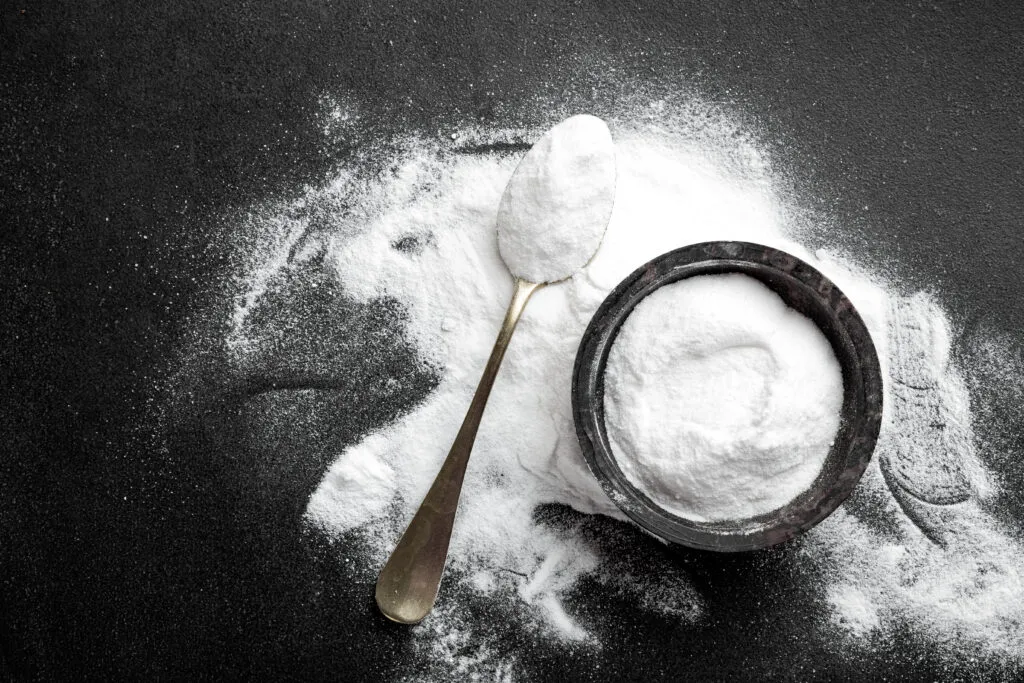
For completeness, here’s also a comprehensive list of home remedies that can work as odor absorbers, cover-ups, or cleaners.
As always, home remedies should only be used with caution and by someone with sufficient experience. We assume no liability for resulting damage!
-
Baking soda / Baking powder:
- spread a layer of baking powder or baking soda on the affected area and leave it overnight. Brush the area thoroughly the next morning. These absorb odors.
-
Vinegar
- apply a vinegar solution to the affected area and let it work for a few hours. Vinegar kills bacteria and breaks down some organic substances.
-
Vodka / Alcohol
- put some vodka in a spray bottle and spray the affected area. It’s primarily used to kill bacteria.
-
Cat litter
- spread a layer of cat litter on the affected area and leave it overnight. Cat litter absorbs odors somewhat like baking soda.
Conclusion
There are various methods to remove unpleasant odors from the car. Superficial cleaning should be performed regularly; for stubborn odors, however, a thorough deep cleaning is necessary. Here, microorganisms can provide great support to make your car smell fresh and pleasant again.
In our shop, you’ll find numerous Odor removers based on microorganisms with which you can quickly and easily achieve your desired results.