
How to Remove Cat Urine – The Complete Guide
How to Remove Cat Urine and Its Odor
Want to remove a cat urine stain? You’ve come to the right place.
Cat urine is the nightmare of sensitive noses. Or perhaps any nose at all. Anyone who has ever had the pleasure of dealing with cat urine odor in their own home knows exactly what I’m talking about.
These descriptions and methods work just as well for dog or human urine.
In this comprehensive guide, we describe where the odor comes from, what products and tools are available for removing cat urine and its smell, and provide detailed instructions for all common places where cat urine can be found.
If you have any further questions, we’d be happy to answer them.
There are thousands of reasons why a cat might urinate somewhere inappropriate. There’s no reason to be embarrassed or to give up. We’re here to help. Removing cat urine odor is no longer a problem with our guide.
Table of Contents
- Why does cat urine smell so bad?
- Preparation
- Cleaning Instructions
- Odor Still Present After Cleaning
Video Guide
We’ve created a “short version” of this article as a video. Feel free to watch it here:
https://www.youtube.com/watch?v=qVrBCoXb7OQ
Why Does Cat Urine Smell So Bad?
In short: Cat urine – especially urine from male cats – contains a supposed pheromone, abbreviated as MMB. It’s created by the breakdown of amino acids (felinine) found in cat urine. This pheromone is responsible for the typically penetrating smell of cat urine. In simple terms, you can imagine it like this:
-
The cat urinates somewhere
-
Amino acids in the cat urine are exposed to air
-
The amino acids break down and produce the mentioned pheromone
-
The pheromone spreads through the air and ends up in our noses
Cats have a habit of returning to urinated spots to use as their toilet, which is why you should use products that break down the odor-causing substances in cat urine.
Cats do this because they instinctively want to leave as few trails as possible for potential predators and prey. This is also one of the reasons why cats bury their urine and feces.
Cats also bury food they no longer want to avoid attracting predators. You can often observe this instinctive behavior at home when cats start “digging” next to their food bowl after eating (or when something doesn’t taste good).
What Can I Do to Completely Remove Cat Urine Odor?
Completely getting rid of cat urine odor requires some effort. Fortunately, there are many tools that can help locate stains and at the same time prevent cats from permanently converting the sofa into their toilet.
Fundamentally, we recommend Bio Urin Attacke for removing cat urine. But this isn’t the only solution. There’s also DLexa, which also works against cat urine odor. Both are odor removers with a cleaning component, which is very important.
If your goal is to keep the cat away from a urination spot, we have another article that goes into detail about how to keep cats away through scent.
We also have an article about home remedies for cat urine, which may also provide quick relief. However, we advise against this for obvious reasons mentioned in the article. It’s much easier and more effective with a specialized product. Plus, when you consider the effort and risks, home remedies aren’t really cheaper.
Does Urine from Sick Cats Smell Worse?
Many people believe that urine from sick cats smells worse. Some rumors go so far as to claim that this smell cannot be removed. While the first point may be true in a very few cases, that doesn’t mean the odor can’t be removed.
In the past, there may have been no real solution for some odors. However, with the modern use of enzymes and microorganisms against odors, this is no longer a problem. Products like Bio Urin Attacke and DLexa also help with urine from sick cats.
In the preparation section, we explain what utensils and cleaners should be available. Some are optional and recommended depending on the severity of the problem.
Cleaners for Cat Urine and Odor
There are only two things essential for cleaning. These include paper towels (kitchen roll) and a cleaner.
As a cleaner for cat urine and especially against the odor that you can hardly get rid of with normal cleaning products, we recommend the following:
1. Bio Urin Attacke - Cat Urine Remover and Odor Eliminator
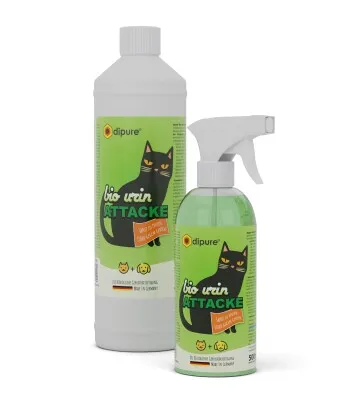
Bio Urin Attacke has proven itself over more than 10 years as, in my opinion, the best cat urine cleaner. But it’s not magic, so it’s important to follow the cleaning instructions exactly for success.
2. DLexa Odor Eliminator and Cleaner
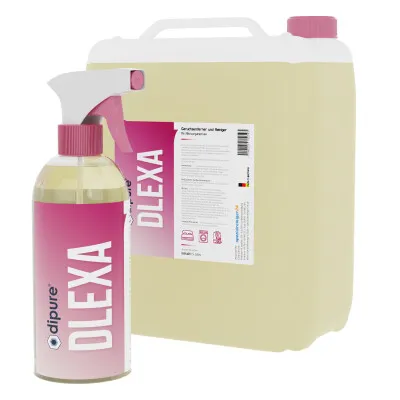
DLexa is the alternative. A modern product that helps with many odors. The microorganisms do more cleaning work here and actively help break down the urine. Very practical when you can’t easily reach the spot or the area is difficult to wash out.
Note: Cleaners based on microorganisms are not comparable to normal cleaning products. The microorganisms are alive and can be killed by disinfectants, temperatures that are too high or too low, as well as strongly acidic or alkaline cleaners. If you’ve previously tried to clean the cat urine stain with another product, you should thoroughly rinse the area with water and let it dry before applying Bio Urin Attacke or DLexa.
Tools and Equipment for Removing Cat Urine Stains
Preparation is half the battle. There are different options for tackling cat urine. Here are some of the most important tools.
UV Blacklights
It’s often very difficult to find the exact spot where the cat urinated. When suddenly the whole room smells like cat urine, in my experience there’s no easier method than a UV blacklight. You simply illuminate carpets, sofas, upholstery, mattresses, and the urine (as well as other body fluids) will glow very clearly under it.
UV blacklights come in many different sizes and shapes, but especially small handheld tubes in flashlight format. With an elongated fluorescent tube, a larger area can be illuminated and examined at once than with spot flashlights.
Shampooing Brushes and Sponges
Brushes and sponges are practical for any cleaning. Therefore, you usually already have these at home. However, after cleaning a urine stain, you shouldn’t necessarily use them for the kitchen again.
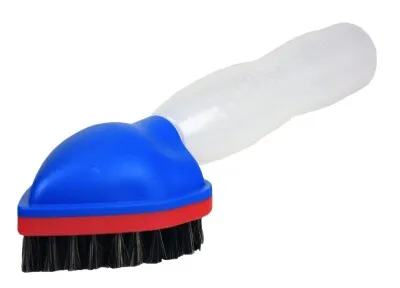
A high-quality and sturdy upholstery brush is available in our shop. Tip: Save old kitchen sponges and pot scrubbers for such cases. Just be careful that no old grease stains on the sponges ruin the upholstery!
Paper Towels (Kitchen Towels)
Kitchen towels are perfect for cleaning cat urine. They’re absorbent, will be disposed of after use anyway, and are already present in most households.
In the case of a carpet or upholstery, place paper towels on the cat urine stain. Preferably several layers on top of each other. Then press firmly (or even stand on it if possible) to push the cat urine from the carpet into the towel. Paper towels are so absorbent that they absorb the urine very quickly and leave fewer residues in the carpet or upholstery.
This process should be repeated several times with new towels until hardly any liquid (urine) is absorbed by the paper towels.
After the Initial Drying
Then, for best results, you should use a proper cat urine cleaner on the spot, which not only removes the stain but also the odor or breaks down the odor-forming substances.
My recommendation is, as already mentioned, cleaners with microorganisms, as in my experience they bring the best results regarding odor and, above all, cannot cause any damage to materials. Plus, you can be sure that neither humans nor animals will be harmed.
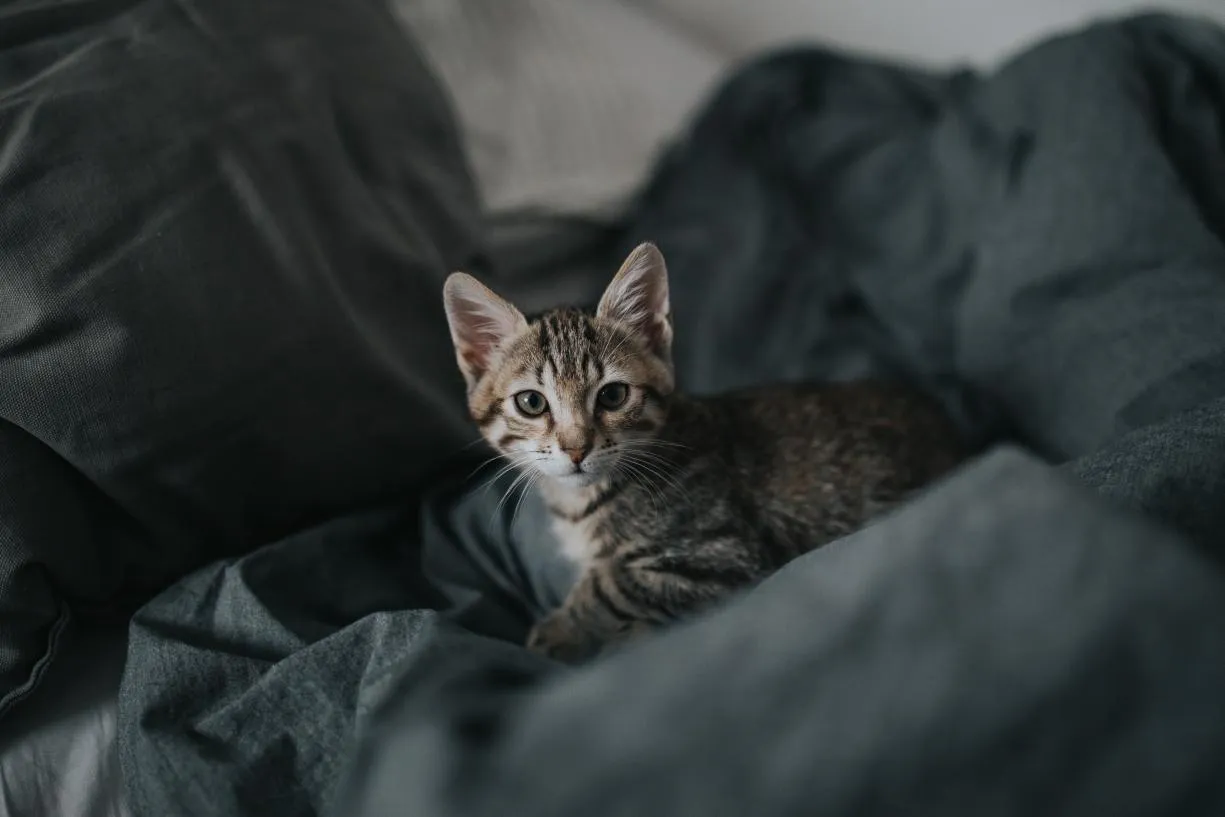
Removing Cat Urine from Pillows and Blankets
Removing cat urine from pillows and blankets depends heavily on the filling, but even here there are no impossible cases. Pillows and blankets should generally first be removed from their covers. The cover should be cleaned separately and is usually easier than the pillow or blanket itself.
Preparing to Clean a Pillow
In my opinion, the easiest method to clean cat urine in pillows is to clean them directly in the bathtub. For smaller pillows, the sink also works. Let lukewarm water run into the basin or tub. Depending on the pillow size, enough so that the pillow can be submerged there.
The urine should be absorbed as much as possible with kitchen towels. Press the paper firmly onto the stain.
Apply Bio Urin Attacke or another cleaner directly to the cat urine stain and work it in or knead it and let it sit for 10 minutes. It’s important that the cat urine is completely enclosed by the cleaner.
Don’t put the pillow in the tub or basin yet.
Cleaning the Cat Urine Stain in the Pillow
For heavy soiling, you can add some cat urine cleaner to the basin to make the cleaning even more thorough. The pillow is now submerged and kneaded properly under water so that the water can flush through the entire pillow. If the pillow is particularly thick, it can be left in the water for 5 minutes to soak.
After the soaking time, the water can be drained from the basin. The pillow should now be squeezed well to get as much water out as possible. Then the pillow should be put in the washing machine and washed in the usual way.
If machine washing is not possible, the pillow must be rinsed by hand with clean water.
Preparation and Cleaning of Blankets
For blankets, proceed in roughly the same way as for pillows. Absorb as much urine as possible with kitchen towels. The stain is now directly treated with the cleaner (e.g., Bio Urin Attacke) and worked in. Now let it sit for about 10 minutes.
During the soaking time, you can already run lukewarm water into a tub. Enough water to be able to submerge the blanket in it.
If the blanket is very thin, you can also stretch the affected area over an empty bucket and then let the cleaner and water run through the blanket to rinse out the urine.
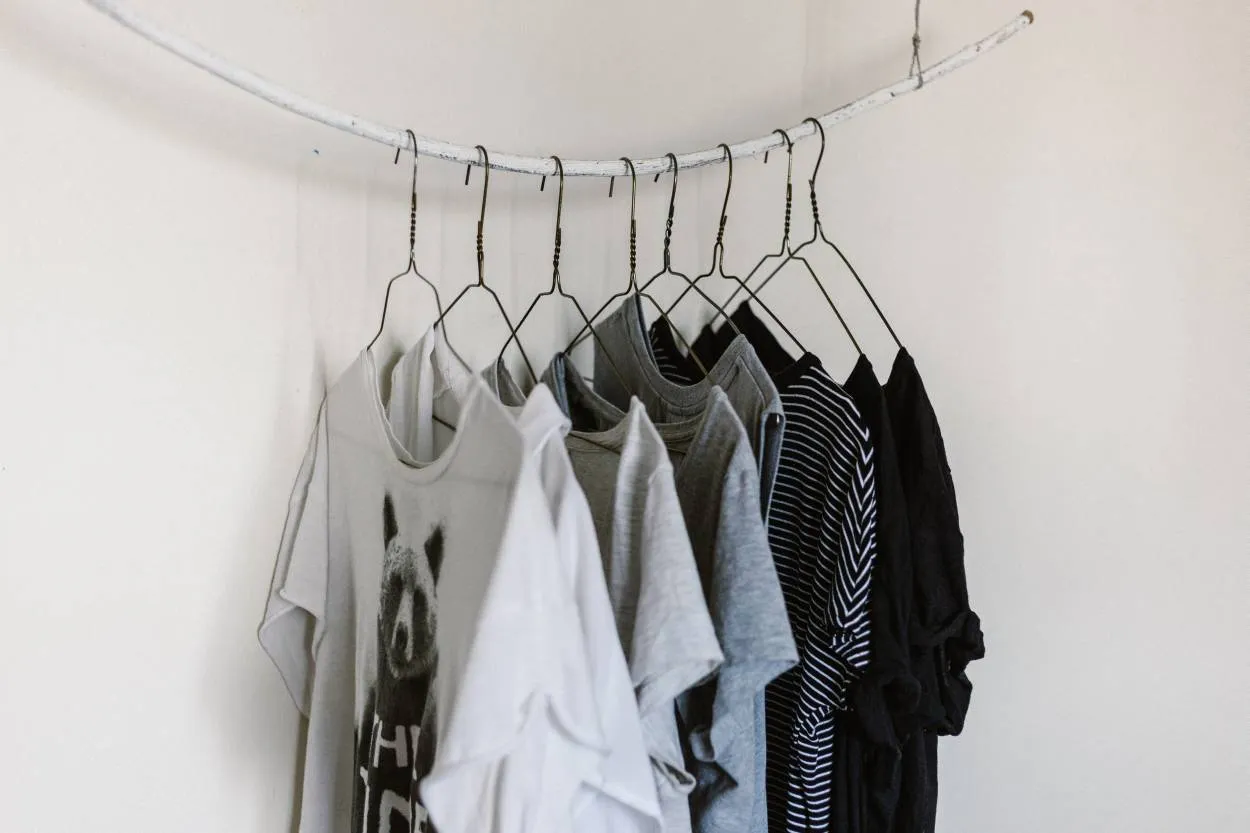
Removing Cat Urine from Clothing and Textiles
Clothing items and other thinner textile parts such as towels and bed sheets can be freed from cat urine with relatively little effort.
With clothing and delicate textiles, you should generally avoid home remedies. Many clothing items lose color, or in the worst case, the fibers themselves can be damaged!
Cleaning Cat Urine in Non-Delicate Clothing
The best method is to place the affected clothing in the bathtub or sink and soak them with some cat urine remover. Make sure the water is only lukewarm. Let the whole thing soak for about 20-30 minutes and then put it directly in the washing machine and wash as usual. The cleaner doesn’t need to dry or be rinsed out beforehand.
As mentioned above, you should not use home remedies on delicate clothing as they are too aggressive!
Cat Urine Odor in Other Textiles
Small covers, towels, and bed sheets can be cleaned in the bathtub as described above to get rid of cat urine. If the blanket or sheet is too large for the washing machine, it must be rinsed well with clear water after cleaning and hung up to dry.
If the stain is quite fresh or only small, you can also treat a single spot directly. Here is my preferred approach:
Take a normal cleaning bucket, place it upright, and lay the blanket with the cat urine stain on the bucket so that the stain is directly over the opening. Now you can either secure the blanket around the bucket with a large belt or simply hold it by crouching in front of it with your knees. You can now work on the stain with home remedies or cleaners as you like without having to worry about the liquid, as it all ends up in the bucket. With this approach, you can also rinse wonderfully with clear water and don’t have to leave any cleaner residues in the textile.
Damage to Textiles from Cat Urine
Many very delicate textiles can be damaged by cat urine alone. This may doom any rescue attempts from the start. If the material can withstand cat urine or the stain has just occurred, the clothing can be treated with cold water and some cat urine cleaner.
Removing Cat Urine from Mattresses
Freeing mattresses from cat urine is fundamentally not difficult. The problem is that they are very thick and cat urine can soak deep into the mattress.
A great help here is if you have plastic wrap or a plastic bag. We’ll explain how to use it shortly.
Preparation
First of all, paper towels should be placed on the urine stain. By pressing firmly (possibly even sitting on the paper towels to exert more pressure), cat urine is pushed out of the mattress and ends up in the paper towel. This process should now be repeated with fresh paper towels until hardly any liquid ends up in the towel.
Now Apply the Cleaner
Now the cat urine cleaner is applied directly to the stain. Feel free to unscrew the spray head from the bottle and drip the cleaner directly onto the spot. Cover the stain well and also think about the urine that has already soaked in. This must also be reached.
Once the cleaner (preferably Bio Urin Attacke) has been distributed on the stain, take the plastic bag mentioned above. This is placed on the stain (it’s advisable for the bag to be much larger than the stain) and apply good pressure. You can either stand on the spot (if possible) or sit on it. Now knead well. Step alternately with your feet or sit down and stand up several times with your bottom. The product is thus well distributed in the material and can excellently reach the urine.
After a soaking time of 15-30 minutes (depending on the size of the urine stain), the liquid can now be absorbed with paper towels using the same principle explained above. Once most of the liquid is out of the mattress, it can be left open to dry. Please don’t cover the stain as mold can otherwise develop.
Removing Cat Urine from Sofa, Couch, and Upholstery
Thick upholstery such as on sofas, couch seats, or armchairs is by far the worst place a cat can choose as its toilet. Upholstery absorbs urine particularly quickly due to its absorbency. Often the upholstery of sofas and armchairs is also firmly sewn in and cannot be removed separately.
But don’t worry, it is possible to clean such upholstery from cat urine and save it, although it’s considerably more work than other procedures. Here we divide the approach for the different cases that can occur.
When the Upholstery or Cushion Can Be Removed Individually
In the case where the upholstery can be removed from the couch or armchair, the treatment is by far the easiest.
Fundamentally, the procedure in this case is the same as already described under cleaning pillows.
After cleaning, rinse the upholstery with clear water until no more foam forms (this can take a while!) and then let it dry. Caution: Depending on the type of foam, it can react well, poorly, or unpredictably to different drying times. Here either research with the manufacturer is necessary or experimentation is required. Generally, foam should not be left wet for too long as mold can otherwise develop.
When Upholstery and Cover Are Attached to the Furniture
Here it becomes somewhat more problematic to properly remove the cat urine. If it sits deeper in the upholstery and is difficult to clean, the odor can come back even after a long time.
Home remedies hardly help in this case anymore, as rinsing is more difficult and they don’t work independently. Microorganisms are the best choice here and should be preferred.
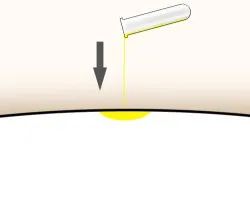
Let’s assume cat urine is flowing onto the upholstery from above. The upholstery absorbs the urine and it spreads under the surface or entry point. Here you have to imagine it like a wall or window that you spray with a spray bottle. At certain points so much water collects that individual drop channels form, in which the liquid continues to seep downwards. Any following liquid follows exactly this path, at least initially.
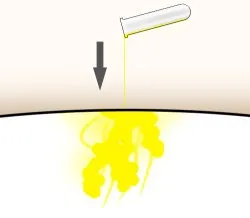
Now the Cleaning Begins
The cat urine spreads depending on how big the cat is (or rather how strong the urge was) in all directions into the upholstery.
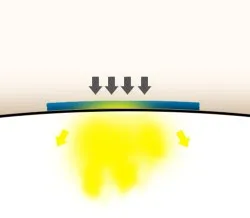
When you now absorb the “worst part” with a towel or paper towel, you do get a good portion of the cat urine directly out of the upholstery, but the rest remains deeper in the upholstery and is partially pushed even deeper. But that’s not necessarily a problem, since we’ve already gotten a large part out.
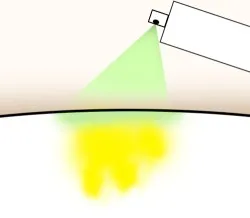
Now comes the part where e.g., Bio Urin Attacke or another cleaning product is applied. In this case, the product is sprayed as evenly as possible on the upholstery.
Note that this approach only works for thin upholstery.
As seen in the green-marked area, this approach is NOT sufficient to fully reach the cat urine in thicker upholstery. In such a case, the product must be dripped or poured on wet as in the following picture.
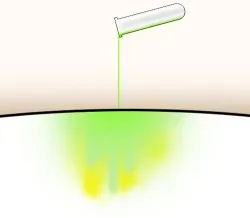
Here you can already see a completely different reach of the product. The area not reached shown here will be solved in the next step. It’s important not to be too sparing. The cat urine must be completely enclosed so that no urine residues remain in the upholstery.
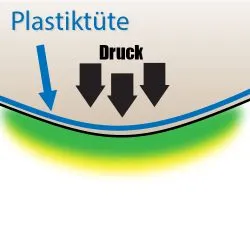
A plastic bag or wrap is placed over the stain. Now pressure must be applied to distribute the product well in the upholstery. Best to stand or sit on it to exert a lot of force. The compression of the upholstery helps reach the deep-seated cat urine.
No Success Without Kneading

This picture shows the worst case that can happen. The upholstery has dried, the cleaner is used up, and the cat urine is still further down in the upholstery. This occurs as mentioned when either too little cleaner is used or the previous step was not carried out thoroughly.
In this case, the urine odor can penetrate through the upholstery again after some time. Cleaners based on microorganisms help most in such cases, as they spread somewhat beyond the liquid area.
Generally, in such a case, a second treatment probably needs to happen.
The Cat Has Urinated in the Most Unreachable Crevice of the Couch
Okay, now it gets tricky. The cleaning in such a case depends heavily on the type and construction of the couch or armchair. To get to this spot, the frame must have a hollow construction. If you place the couch on its back or on the seating surface, you can often reach the hollow space from below where the cat urine is now located. Here you often find access to the fabric that is now affected. Sometimes the urine even seeps into the wooden frame.
To clean the cat urine there, it’s advisable to use DLexa as a cleaner as it does a lot of self-acting work.
Alternatively, the couch can be laid on its side and you now spray the spot generously with cat urine remover from both sides. When the spot is well soaked, now apply pressure from both sides (preferably with two people!) and distribute the cleaner well in the upholstery.
Then rinse thoroughly with plenty of water, absorb the excess water with a towel or paper towels, and let it dry well afterward.
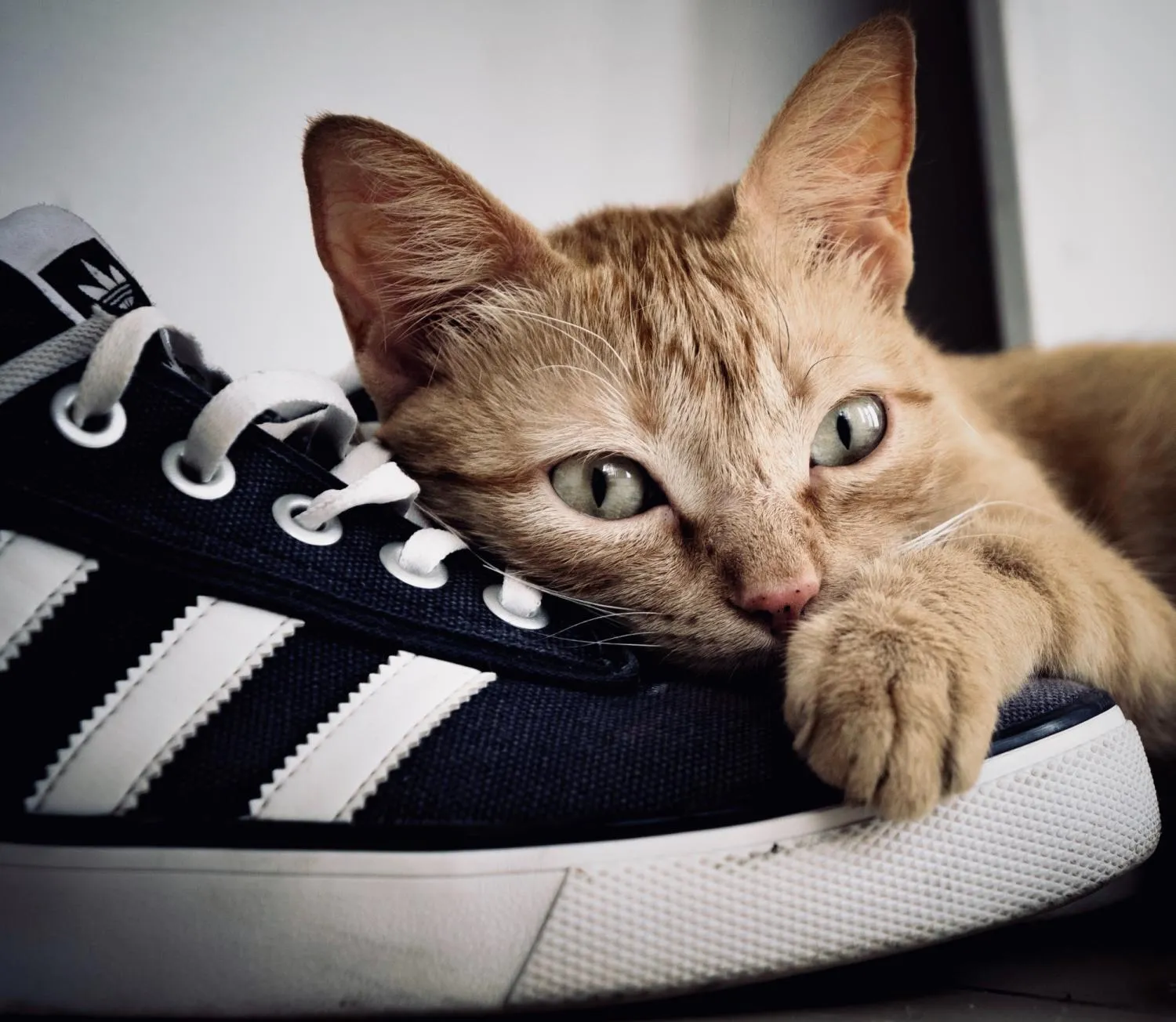
Removing Cat Urine from Shoes and Boots
Cat urine in shoes is not only a problem for the nose, but often you only notice the whole thing when your foot has already stepped in. Most shoes, especially athletic and work shoes, are quite easy to free from cat urine. Leather shoes or boots, on the other hand, are more of a problem. With leather, even products with microorganisms only work to a limited extent.
Cat Urine in Work and Athletic Shoes: Proper Cleaning
To get cat urine out of work and athletic shoes, a complete cleaning helps. Spray the entire shoe with Bio Urin Attacke or DLexa and let it soak. Then rinse the shoe and wash it in the washing machine. If this isn’t possible, it should be thoroughly rinsed with water and dried.
Treating Cat Urine in Shoes in a Targeted Way
Was the shoe urinated on from the outside? Or did the cat hit the opening? A short checklist to find the right approach:
-
Was the outside of the shoe urinated on?
-
Did cat urine run inside? E.g., through air holes or thin textile
-
Does the shoe have sensitive parts that shouldn’t be washed?
-
-
Did cat urine get inside the shoe?
-
Is the sole removable? If yes, remove it!
-
Does the shoe have a membrane on the underside that may have gotten wet?
-
If cat urine has run inside the shoe, the sole and other removable inserts should be removed immediately and cleaned separately. Often it’s better to throw away such parts completely rather than try to clean them. Many shoe insoles lock in cat urine too well once it’s been absorbed.
Instructions for Cleaning Cat Urine in Shoes
Assuming the shoe can handle cleaning (see the section on delicate footwear below) and the insoles and other inserts have been removed from the shoe, the actual cleaning now begins. You can also clean the stain without a major wash if it doesn’t smell too extreme. The instructions here are only for cases where spraying and rinsing aren’t enough.
The shoelace (if present) should now be removed. If necessary, this can later be placed in the cleaning solution, but it would be better to simply replace it altogether.
Fill a sink or small tub with lukewarm water. Apply DLexa or Bio Urin Attacke directly to the cat urine stain and let it work for 5-10 minutes. The rest of the cleaner is now added to the basin. A dilution of 1:2 to 1:5 should be used depending on the product used. So depending on the size of the shoe, you need to reckon with about 1/2 - 1 liter of cleaner.
The shoe is now placed in the basin. It’s best to work on the cat urine stain directly with a brush or sponge so that the cleaner can penetrate well into the material. The shoe can soak well for 5 minutes in the water before you start cleaning.
Then be sure to rinse the shoe thoroughly with clean water. This completely flushes out the dissolved cat urine. Now hang the shoe in a well-ventilated place to dry. Just don’t leave it wet too long as mold can otherwise develop!
Very Delicate Footwear Should Go for Professional Cleaning
Expensive genuine leather shoes or delicate dress shoes should be taken to a professional for cleaning. It’s often not worth trying to clean them yourself, especially if you’re not familiar with the properties of the material used. Better to pay once for proper cleaning than having to buy new shoes. Of course, you have to weigh for yourself how much the shoes are worth to you.
Removing Cat Urine from Carpets and Rugs
Whether it’s the doormat or the beautiful high-pile carpet in the living room that has been affected doesn’t matter: The thing can be saved!
Caution: Firmly glued carpets can present a special problem. The adhesive can react with the cat urine and make any cleaning impossible. Unfortunately, you only know for sure if this is the case after you’ve tried the cleaning.
Thin Rugs and Doormats
The cat urine stain in the carpet should first be covered with paper towels. Now apply a lot of pressure, either by pressing with your hands or standing on it to get as much cat urine as possible from the carpet into the paper towel.
Repeat this process with new paper towels until the new towels remain mostly dry. Now you can use the cleaner.
Thin carpets and doormats can often be cleaned by simply spraying. It doesn’t matter whether commercial products or home remedies are used. But please make sure that the color or fiber is not attacked by home remedies, as some carpets are sensitive.
After the cat urine cleaner (e.g., Bio Urin Attacke) has had time to work, simply rinse the spot with clean water and then let it dry.
Cat Urine on High-Pile Carpets and Large Living Room Carpets
Some carpets are too large or too heavy to be treated from both sides. This is generally not a problem, as long as you can put in a bit more patience and work.
Use the paper towel method! Place paper towels on the cat urine stain, press down (with your arms or by standing on it). Repeat with new paper towels until the towels barely absorb any more moisture.
For high-pile carpets, the product should be applied directly wet, i.e., dripping or applying with a sponge, so that the cat urine is thoroughly covered. After a soaking time depending on the product used, the spot should be rinsed with water, again absorbing as much liquid as possible afterward.
The stain and odor should no longer be noticeable after drying. If this is still the case, the spot was not well enough wetted or not well enough rinsed. Often rinsing the spot again with lukewarm water helps here.
We also have a video on this topic:
https://www.youtube.com/watch?v=Bz-h134IJE8
Additionally, after cleaning as shown in the video, you can rinse the spot with water to be absolutely sure.
Firmly Glued Carpets and Carpet Floors
Glued carpets are one of the biggest problems when it comes to cat urine. Cat urine is acidic and can attack the adhesive under the carpet. To avoid damage, remove the cat urine as quickly as possible. Older stains can represent a long-term odor source. The cat urine can react with the adhesive.
The procedure is the same as described above for high-pile carpets. As a rule, and with most types of adhesive, this works without problems. If the cat urine stain can be removed but the odor keeps coming through, unfortunately the only solution is to detach the carpet, remove the adhesive residue, and then reglue.
Removing Cat Urine from Laminate and PVC Floors
Cleaning cat urine on flooring such as laminate and PVC is not difficult. The biggest risk is leaving the spot wet for too long.
Preparation for Cleaning
First of all, the cat urine stain should be thoroughly dried, using the usual method with paper towels. For this, clean paper towels are pressed onto the spot until no more cat urine can be blotted up. Now the cleaning can begin.
Cleaning the Cat Urine Stain
To get rid of cat urine and odor, the stain must first be thoroughly cleaned.
Bio Urin Attacke is sprayed directly onto the now dry stain until it is well wetted. For laminate, don’t let it work for more than 1-2 minutes.
After soaking, the spot should be thoroughly wiped with a damp cloth to absorb the dissolved cat urine. Now the spot should dry again for about 15 minutes.
Once the spot is reasonably dry, you should now smell it to see if there’s still urine odor left. If the urine odor is still noticeable, you should apply cat urine cleaner to the spot again and give the product time to work again. After this, repeat the last step of wiping and letting dry.
If there is now no or hardly any urine odor noticeable, you should thoroughly rinse the spot with lukewarm water. It’s best to take an absorbent sponge and apply plenty of water to the spot several times and wipe it dry with a towel. After 2-3 repetitions, you should let the spot dry one last time for about 30 minutes.
If the steps were followed properly, the stain should now be completely gone and also no longer detectable by the cat.
Odor Still Present Despite Cleaning?
In rare cases, the odor may still be present after cleaning. It’s important to distinguish between the different cases.
The Amount of Cleaner Was Not Sufficient
Even after years of odor removal both privately and professionally, I still misjudge sometimes. Not only do materials react differently depending on temperature, humidity, etc., but the microorganisms can also be more or less effective at times. This isn’t about the product being sometimes good and sometimes bad, but simply that conditions affect the microorganisms more than you think. A normal carpet cleaner works almost always the same.
Microorganisms are temperamental since they are very much alive. There are many factors (besides those already mentioned above like temperature etc.) that can limit or enhance their effectiveness.
If there is a clear improvement in the odor after odor removal, but it’s not completely gone, generally too little odor remover was used or the urine is deeper in the material than initially assumed.
My advice: Instead of throwing away the clothing/upholstery/pillow, better invest in another bottle of odor remover. It makes sense to use the same one again rather than trying a different product.
The reason for this is: The microorganisms in odor removers differ partly significantly. They are all microorganisms, but different strains. These can potentially limit each other and make cleaning even harder.
The Cat Urine Is Still in the Material
Especially with thick upholstery, it often happens that the odor comes back slightly after a few hours or days. This happens because urine is still present in the cushion and through humidity, new bacteria and emissions are generated.
For particularly thick upholstery or pillows, cleaning with a wet vacuum is advisable. I know, sounds like a lot of effort. But it’s almost unavoidable. The only alternative would be to use a self-cleaning product like dipure DLexa. And in large quantities.
Many hardware stores rent wet vacuums by the way. If an expensive couch is to be saved, it’s worth the extra effort.
My advice: Rent a wet vacuum and tackle the problem properly.
The Odor Is Stronger Than Before the Odor Removal
If the odor becomes significantly stronger or stranger, this is fundamentally a good sign. Odor neutralization can initially produce a stronger odor in some cases. However, if this happens after completion of the entire cleaning process, this is not good.
Generally, an intensifying odor means that neutralization is in full swing. The microorganisms are eating through the odor molecules and producing a smell in the process. However, this odor dissipates quite quickly and is only noticeable at the beginning of the cleaning, if at all.
If the odor is STRONGER after cleaning, this is usually a sign that the microorganisms couldn’t work properly. Either it’s due to another product that was used before or at the same time. On impregnations or tanning agents that are on the material or on perfumes that may have been sprayed on the material as a first emergency solution.
In any of these cases, it’s important to follow the instructions exactly. Any material should be thoroughly freed from foreign substances before applying microorganisms. This can be achieved by thorough rinsing with water.
Disinfectants in particular should be avoided when it comes to microorganisms. Even days after the application of a disinfectant, it can still significantly limit the microorganisms.
No Effect at All? Odor Is Still Fully Present.
As in the previous case, this means the microorganisms couldn’t work. If you use a product like Bio Urin Attacke for removing cat urine, the surfactants already help to remove the urine from the material. However, the microorganisms can be limited independently of surfactants (since surfactants are not alive).
Make absolutely sure that the material to be cleaned was not previously treated with other products. Disinfectants must absolutely be avoided.
If treatment with another product has already happened, please follow the instructions exactly and rinse the spots thoroughly.
Table of Contents
- Why does cat urine smell so bad?
- Preparation
- Cleaning Instructions
- Odor Still Present After Cleaning
This concludes our article on cat urine. We hope you found answers and help.
Of course, the instructions shown here can also be carried out with other cleaning products. In our opinion, Bio Urin Attacke and DLexa bring the best results.
If you have any questions, please feel free to contact us. We would be delighted if you would share this article with your friends and acquaintances. Thank you for reading!
Updated on 24.02.2023