
Remove Rodent Odor After an Infestation — Rats, Mice & Other Rodents
Did you take over a garden property and now the shed smells absolutely awful? Or have mice nested in your basement and the odor just won’t go away? A rodent infestation leaves behind a penetrating smell made up of urine, droppings and nesting material that works its way deep into wood, concrete and masonry. In this post, we’ll show you how to get rid of the odor reliably — depending on whether you can reach the source or not.
Why does rodent infestation smell so extreme?
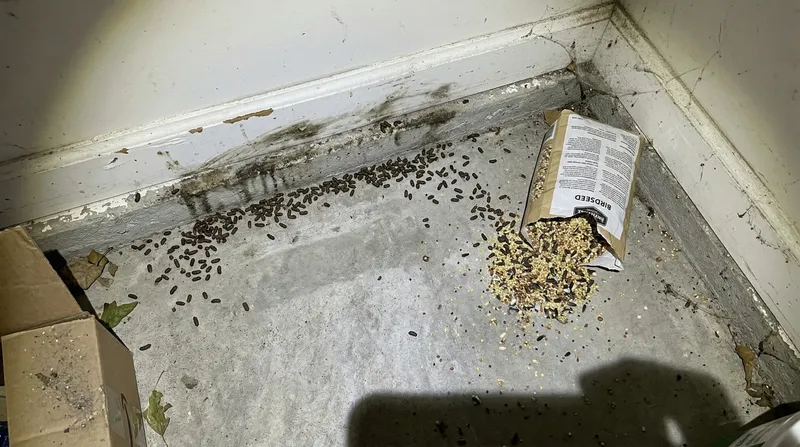
Rats and mice constantly mark their territory with urine. Unlike a single stain, this often means deposits that have built up for months or even years and become embedded in porous surfaces. On top of that, there are droppings, nesting material and food residues — an ideal breeding ground for bacteria that intensify the odor even further.
What makes it especially tricky: the smell often doesn’t sit only on the surface. With wooden floorboards, untreated concrete or old masonry, the urine penetrates deep into the material. That is why the odor can come back again and again even after thoroughly cleaning the surface — especially when humidity or heat increases.
In the worst case, the urine odor is joined by decomposition odor if animals have died in cavities.
Step 1: Find and clean the infested area
Before you tackle the smell itself, the source has to be removed as far as possible. No odor remover in the world can permanently beat an active odor source.
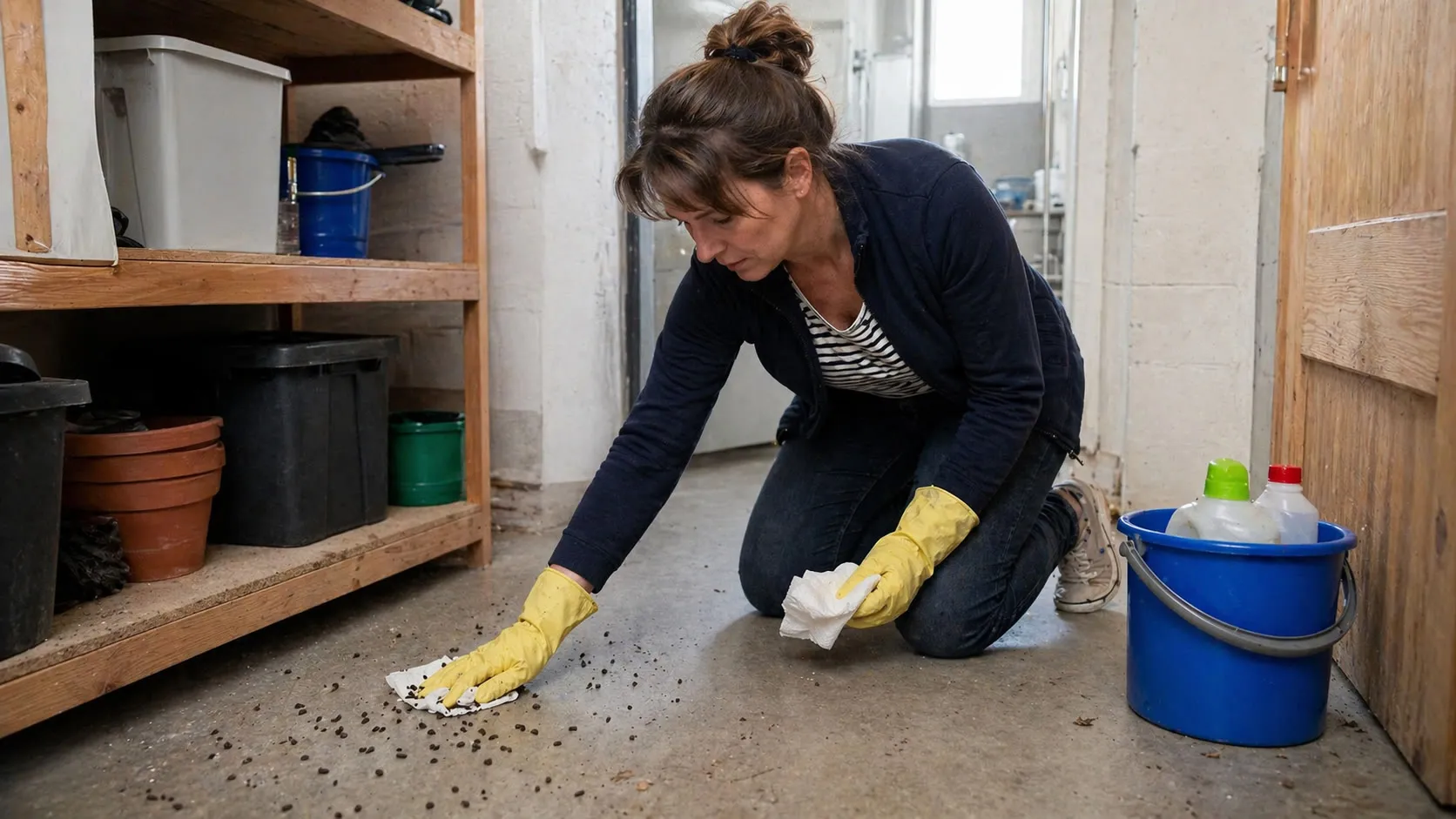
Important: Always remove mouse droppings while damp, wear protective gloves and avoid dry sweeping so contaminated dust is not stirred up.
Start with these steps:
- Wear protective equipment: gloves and a respirator mask. Rodent remains can transmit pathogens such as hantaviruses.
- Remove droppings, nesting material and food residues. Do not sweep dry. Instead, use damp cloths or a vacuum with a HEPA filter.
- Clean affected surfaces thoroughly — use an all-purpose cleaner on smooth surfaces and a brush on porous materials such as wood or concrete.
- Check heavily contaminated items: old cardboard boxes, newspapers, upholstery or insulation material that has been thoroughly infested by rodents should be disposed of.
Step 2: The right odor treatment — two scenarios
This is the crucial part: the correct approach depends on whether you can reach the source of the odor or not.
Scenario A: The odor source is accessible and removable
If you were able to remove the droppings and nesting material completely and only residual odor remains in the surfaces, treatment is comparatively straightforward.
Recommended procedure:
- Treat the affected surfaces with DLexa Odor Remover & Cleaner. DLexa cleans and removes odor at the same time — the contained microorganisms break down organic residues that remain invisible to the human eye but still smell.
- Apply generously and work it in instead of wiping only superficially. On wooden floors or concrete, the product should be allowed to soak in.
- Let it dry. The microorganisms continue to work as long as there is moisture.
- For the remaining room air, then use Destral Odor Neutralizer. Destral neutralizes odors in the air and on surfaces that were not directly contaminated but have absorbed the smell.
Scenario B: The odor source is not accessible
This is the more difficult case — and unfortunately not uncommon. Rodents often nest under floorboards, in cavities behind cladding, in suspended ceilings or below foundations. In those places, you simply cannot remove the urine and residues completely.
Recommended procedure:
- Apply DLexa as close as possible to the suspected source. On wooden floors, for example, work it into joints and cracks. The microorganisms spread and break down organic material even in spots you cannot reach with a cloth.
- Additionally use Bio Urin Attacke Powder. The powder can be sprinkled into cracks and gaps and works there over a longer period of time.
- Be patient: if the source cannot be reached, complete odor removal takes significantly longer — in some cases several weeks. The microorganisms work continuously, but they need time to break down deep-seated residues.
Scenario A or B? — Quick overview
| Scenario A: source accessible | Scenario B: source inaccessible | |
|---|---|---|
| Typical situation | Droppings and nests visible, surfaces accessible | Under floorboards, behind cladding, in cavities |
| Main product | DLexa (surfaces) + Destral (room air) | DLexa + Bio Urin Attacke Powder |
| Application | Apply generously to surfaces and work in | Introduce through joints, cracks and gaps |
| Time until results | A few days | Weeks, depending on severity |
| Difficulty level | Medium | High — patience required |
Typical infestation sites and what matters there
Garden shed & storage shed
Garden sheds are a classic example: often left unattended for long periods, built from wood, with lots of cracks and cavities. Here, Scenario B is often the relevant one. Most important: make sure the infestation has ended first by sealing entry points before investing in odor treatment.
Basement
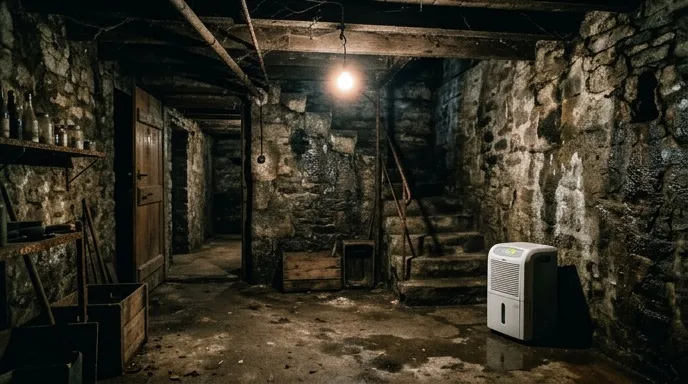
Damp basements intensify rodent odor — a dehumidifier can support the odor treatment.
Basements offer ideal conditions for rodents — dark, damp and rarely visited. High humidity can intensify the smell even more because moisture releases bound odor compounds from the material. A dehumidifier can support the treatment here. If basement odors are generally a recurring issue for you, our article on removing basement mold odor quickly and permanently may also help.
Attic & suspended ceilings
This is where mice typically appear. The problem is that the smell spreads downward into the living area while the source sits inside the ceiling cavity. In such cases, it may be necessary to create an inspection opening so the treatment can be applied in a targeted way.
Garage
Garages with rodent infestation often smell especially strong because the odor concentrates in the enclosed, poorly ventilated space. The good news: garages usually have smooth concrete floors that can be treated well, so Scenario A often applies here.
Home remedies — and where they reach their limits
Online you’ll find countless tips such as vinegar, baking soda or coffee grounds against rodent odor. Let’s be honest: if the smell is mild and only on the surface, these remedies may help a little for a short time. Vinegar, for example, temporarily masks odors and has a slight disinfecting effect.
But with a real rodent infestation, home remedies quickly reach their limits. The reason is simple: they cannot break down organic residues. At best they cover the odor — but once the vinegar or baking soda smell fades, the rodent odor returns. Especially when residues have penetrated deeply into wood or masonry, home remedies won’t get you far.
Prevention: so it doesn’t happen again
Even the best odor treatment is of limited value if the next rodents move in three months later. A few basic measures help:
- Seal access points: mice can squeeze through openings as small as 6 mm. Close gaps under doors, cable entries and ventilation openings with wire mesh or steel wool.
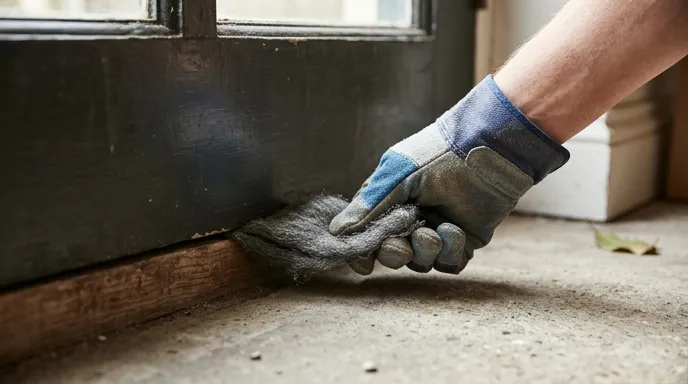
Press steel wool into gaps and cracks — rodents cannot chew through this material.
- Remove food sources: store pet food, bird seed and food supplies in sealed containers, not in cardboard boxes or paper bags.
- Check regularly: garden sheds, basements and attics in particular should be inspected regularly for signs such as droppings, gnaw marks or nests.
Conclusion
Rodent odor is stubborn, but it is no reason to despair. The decisive factor is the right order: first end the infestation and remove the droppings and residues as thoroughly as possible, then fight the remaining odor with suitable products. Whether or not you can reach the source determines the exact approach.
Do you have questions about the application or are you unsure which product is right in your case? Get in touch with us — we’ll help you.
Other posts that may also help: