
Remove Vomit and Odor – How to Do It
Removing vomit and especially the resulting odor made easy. Whether it’s carpet, upholstery, or clothing in your home or car: We’ll explain how.
Removing vomit (or simply put, puke) is by no means an appetizing topic, but sometimes it happens that you have to deal with it. Whether in the car, on the carpet, or on the sofa, the faster you act, the easier the cleaning.
We have compiled some tips for you on how to effectively remove vomit stains and residues. It’s also important that the odor is brought under control early.
Do you just want a quick solution? Our recommendation for vomit odor is a product with microorganisms, such as dipure DLexa.
Remove Vomit from Textiles Like Upholstery or Clothing
If your child, guest, pet, or perhaps even you yourself vomit on the sofa or other textiles, quick action is required. Stomach acid and proteins that such a vomit stain leaves behind have the stubborn property of quickly and deeply penetrating textile fibers. This can cause damage to the textile as well as long-term odor sources.
Vomit is best removed from upholstery with a wet vacuum. This efficiently sucks up even less solid components, so you can remove stains before they form.
If you don’t have such a tool at hand, reach for paper towels and a garbage bag. With the towels, you can remove gross vomit and dispose of them immediately in the bag. Never rub the towels on the upholstery or fabrics with pressure, but only wipe them carefully. The goal is to prevent vomit from being rubbed into the upholstery. This would not only make cleaning more difficult, but possibly cause further damage to the textiles due to the stomach acid.
After you’ve removed the gross vomit from the upholstery, it’s time to work on the wet spots. Since the stomach acid and contents quickly penetrate textiles, you must act quickly here. After all, the goal is to prevent an odor from remaining.
Using the Right Cleaners
With home remedies or specialized cleaners, you now get to work on the upholstery.
Important: The use of any home remedies is at your own risk! We assume no liability for any damage incurred!
If you only have home remedies available, soften all affected areas with a little water. Then apply a little detergent or bile soap to the wet spots. Then rub this into the textiles with the help of an upholstery brush so that a foam forms.
Our Recommendation
We recommend using a professional product with microorganisms against vomit odor from our specialty cleaner shop.
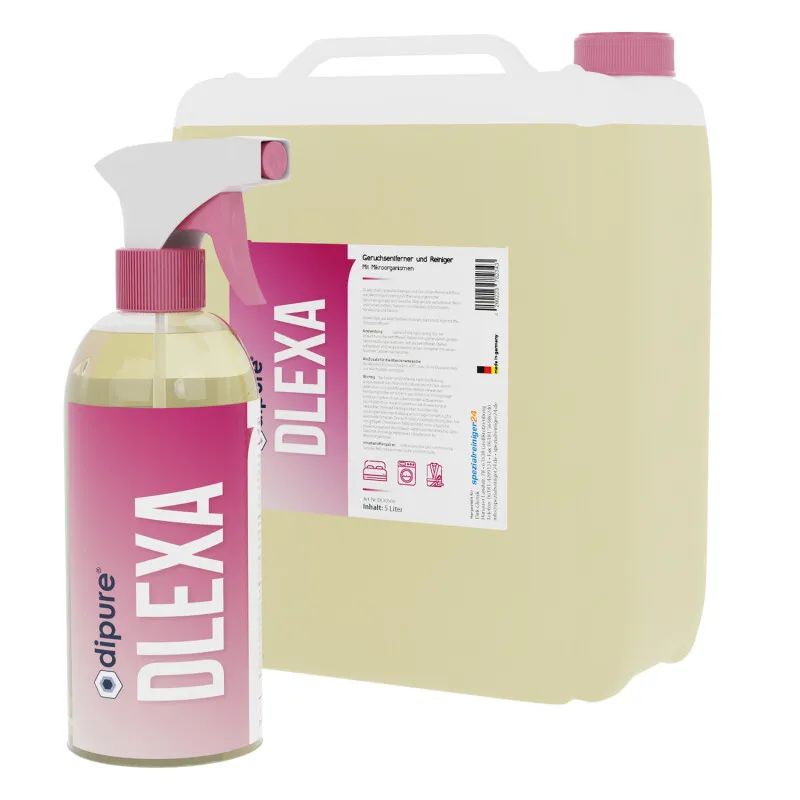
DLexa with Microorganisms
DLexa is excellent for odor removal and cleaning of vomit stains. Especially when the odor is still present despite an initial cleaning.
The microorganisms displace the odor-causing bacteria, neutralize the stomach acid, and break down the existing odor particles into air and water.
Prevent Odors Through Quick Drying
To remove already dried stains, you may need to rub longer and more vigorously so that the cleaner can penetrate the fibers.
However, a short contact time is sufficient in both cases. Then dab the wet spots with paper towels until the upholstery is dry. The drier, the better. This prevents the acid from eating into the upholstery and later producing foul odors. You’ll have a hard time getting rid of these with home remedies, or sometimes not at all.
With clear water and a clean upholstery brush, you then continue to clean all stains. Do this until there are no more detergent or soap residues in the upholstery. Then thoroughly dab the fabric dry.

Nausea can affect anyone.
When Home Remedies Reach Their Limits
Sometimes it happens that even with the greatest care in cleaning, a very unpleasant vomit odor has eaten into the textiles.
If odors stubbornly remain, you should use special products that permanently neutralize odors. The cleaner for removing vomit (and odor) that we recommend is based on microorganisms. These break down foul-smelling residues in the textiles, so that you permanently neutralize the odor source.
If you have carefully carried out all these steps, the vomit should be removed from the upholstery and you should have peace again.
How Do You Remove Vomit in the Car?
This is an even more delicate topic than removing vomit from upholstery: cleaning vomit stains in the car. Depending on where the affected person(s) vomited, the spots are sometimes difficult to access, and you have an even higher cleaning effort.

Children especially quickly feel like vomiting during car rides.
Here too, quick action is required, because once the acid has penetrated the upholstery, it’s very difficult to get rid of the odors. In the worst case, this can also negatively affect the resale value of the car.
First proceed as in the section above “Remove vomit from upholstery”: First remove the gross matter.
Home Remedies for Cleaning in the Car
Depending on whether you have upholstered or leather seats in your car, the home remedies you could use to remove vomit stains differ.
Important: The use of any home remedies is at your own risk! We assume no liability for any damage incurred!
To remove vomit (or puke) from upholstered seats with home remedies, you’ll need, among other things, warm water, vinegar, some dish soap, as well as baking soda or baking powder and an empty spray bottle. Ideally, you should have a wet vacuum at hand.
Before we make a mixture for cleaning, you can use baking soda or baking powder. Apply these generously to the affected areas and let them work and dry for at least half an hour. Then it can be vacuumed up with a vacuum cleaner.
A cleaning mixture can be made as follows: For textile surfaces, mix warm water with vinegar in a ratio of 8:1 and a teaspoon of dish soap. For leather seats, mix baking soda with water in a ratio of 3:1. Fill the mixture into a spray bottle.
Now spray the stains generously with your mixture and scrub them with a cloth. If you want to remove vomit from car carpets, you should use a professional upholstery brush instead of a cloth and scrub longer. Please make sure that you have already removed any superficial dirt here. This prevents you from working the stomach acid into the textile.
Then work on the treated areas with clean water to remove even the last residues of vomit. Use a clean cloth for this. It should be wet for upholstered or textile seats, and damp for leather seats. Make sure you remove as much of the home remedy from the upholstery as possible, otherwise you’ll have to take action again later. Then dab everything dry with a cloth.
Don’t Forget Good Ventilation
It’s advisable to open all doors so that the drying process proceeds more quickly. If the upholstery or floor mats are very wet, you can also use a hairdryer on a low setting.
Check whether there is vomit or other vomit stains between the body and seats. It’s best to tackle the residues with a brush. Crusted remnants can be loosened with some force. You can then vacuum up the dry vomit residues with a vacuum cleaner. Work on remaining spots with the cleaning liquid of baking soda and vinegar already mentioned above and then rinse thoroughly.
Professional Products for the Car Too
Sometimes you’re dealing with particularly stubborn stains and odors. Here, home remedies don’t help much anymore, so you should use the specialty cleaner DLexa with microorganisms against odor already mentioned above. This penetrates deep into the material and effectively breaks down the acid molecules. The microorganisms neutralize these completely. This prevents unpleasant odors in the future.
The big advantage of DLexa is that the microorganisms independently break down the contamination. This also allows you to treat hard-to-reach areas. Here, the treatment just needs to be carried out over a longer period. During this time, spray the affected areas at regular intervals.
So that you don’t have to clean vomit in the car so quickly again, you should always have a few plastic bags ready in the future. In case one of your passengers feels sick again.
Need More Help?
Are you dealing with other odors in your home that you’d like to neutralize?
Do you have more questions on this topic? Then just leave us a comment! You’re also welcome to contact us directly via our contact page.
Updated on 24.02.2023